Residential heating
Heat that shows up before the cold snap does.
Furnaces and heat pumps serviced, repaired, and replaced with the same honest, quality-focused approach we bring to cooling.
Let’s start with what you are noticing.
North Texas winters may be milder than they are farther north, but a heating failure during a cold snap still matters. It affects safety, comfort, and the condition of your home.
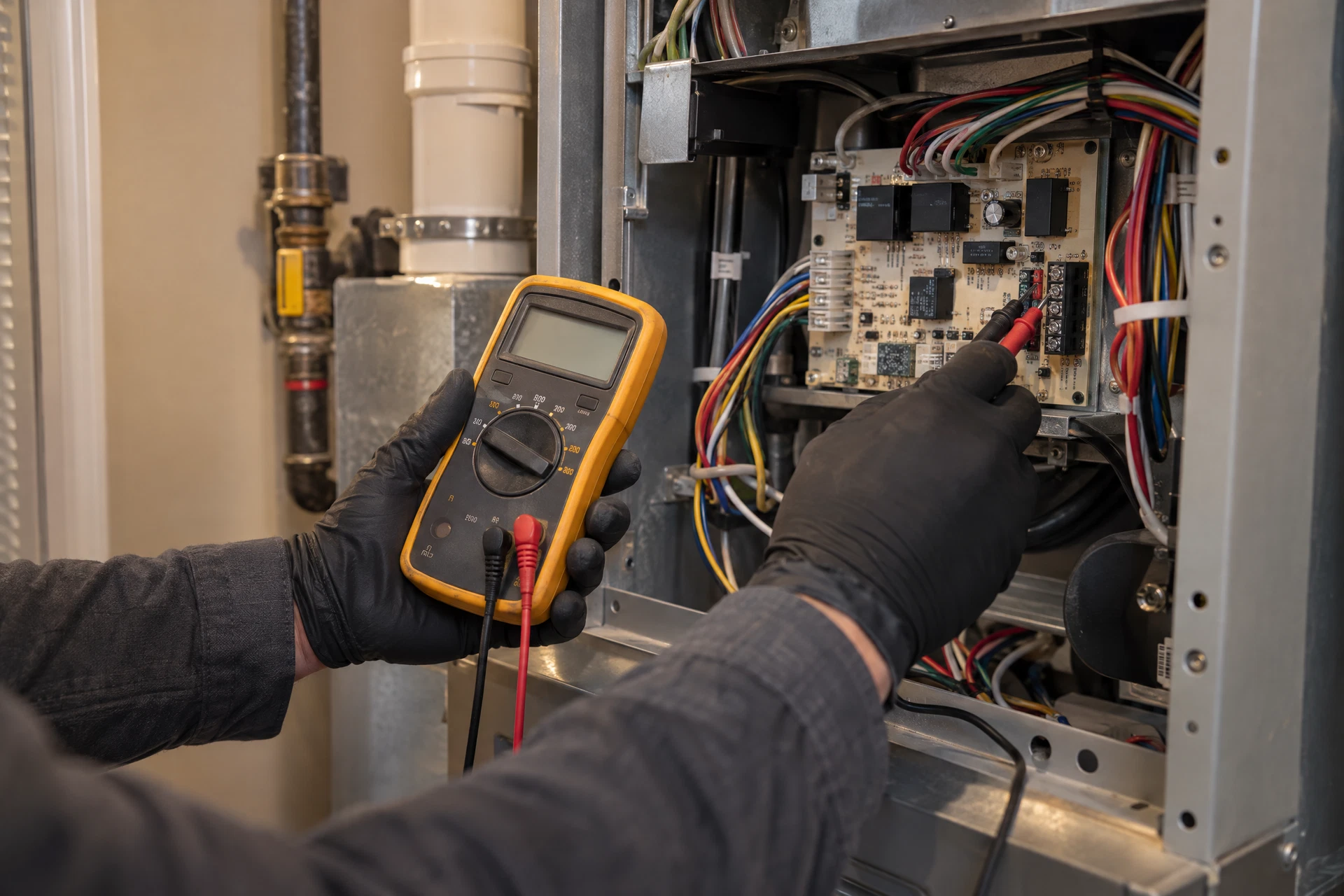
Whether your furnace will not ignite, your heat pump is struggling, or your system is making a noise you do not recognize, we start by diagnosing the actual problem.
When to stop guessing and call
The furnace will not ignite
An igniter, gas valve, flame sensor, or control board issue can all prevent ignition. Some are simple repairs; some need closer attention.
The heat pump cannot keep up
Refrigerant charge, a reversing valve issue, or a defrost-cycle problem can reduce heating capacity without setting off an obvious alarm.
Some rooms stay cold
An airflow or ductwork issue can leave the rooms farthest from the equipment uncomfortable while the rest of the house is fine.
You hear banging or squealing
Unusual furnace sounds usually indicate a mechanical issue that deserves attention before it becomes a more expensive repair.
The system runs but never satisfies
If the blower keeps running and the house never reaches the set temperature, the system is working harder than it should.
You smell gas
Do not diagnose a gas smell yourself. Turn off the system, leave the building, and call your gas utility. Once the safety issue is handled, call us for HVAC service.
Heating service that protects the whole system
- Gas, electric, and dual-fuel heating diagnostics.
- Heat pump repair and replacement, including air-source and mini-split systems.
- Furnace replacement with correct venting, gas connections, and safety testing.
- Airflow and thermostat checks so the system can distribute heat properly.
- Clear explanations of repair options and replacement trade-offs.
- A verification check and walkthrough before we leave.
A safer, clearer heating call
Tell us what you hear, smell, and feel—and when the problem started.
We inspect the equipment, safety controls, airflow, and thermostat to isolate the cause.
We separate the safety issues from the comfort issues and explain what needs attention now.
If repair is the right answer, we fix it. If replacement is the smarter long-term move, we help you plan it.
Furnaces, heat pumps, and the details that matter
- We service gas furnaces, electric furnaces, heat pumps, dual-fuel systems, and mini-split heat pumps.
- Heat exchangers, venting, gas pressure, and safety controls get the attention they deserve.
- We explain the difference between a repair that solves the problem and a repair that only quiets the symptom.
- If your system is approaching the end of its useful life, we help you compare repair and replacement without pressure.
Related comfort services
Straight answers
Questions about heating repair & replacement.
If you do not see your question, call us. A short conversation is often faster than searching for an answer.
Is it safe to run my furnace if it smells like gas?
No. If you smell gas near your furnace, turn off the system immediately, leave the building, and call your gas utility company. Do not attempt to diagnose or repair a gas leak yourself.
How long do furnaces and heat pumps last?
Most gas furnaces last about 15–20 years, while heat pumps typically last 10–15 years. Maintenance, installation quality, and how hard the system works all affect that range.
What is a heat pump?
A heat pump moves heat rather than generating it. It can heat and cool your home, making it a versatile option in North Texas. In extreme cold, it may use a backup heating element to keep up.
How do I know if my heat exchanger is cracked?
A cracked heat exchanger is a safety issue because it can allow carbon monoxide into the living space. Signs can include a yellow or flickering burner flame, soot, or unusual smells. Only a qualified technician can properly inspect it.
Do you install dual-fuel systems?
Yes. We work with dual-fuel systems that pair a heat pump with a gas furnace backup. We will help you decide whether that configuration makes sense for your home.
Ready for a real next step?
Let’s talk about heating repair & replacement at your home.
Call the home team or send a request. We will ask the right questions and help you decide what makes sense.